
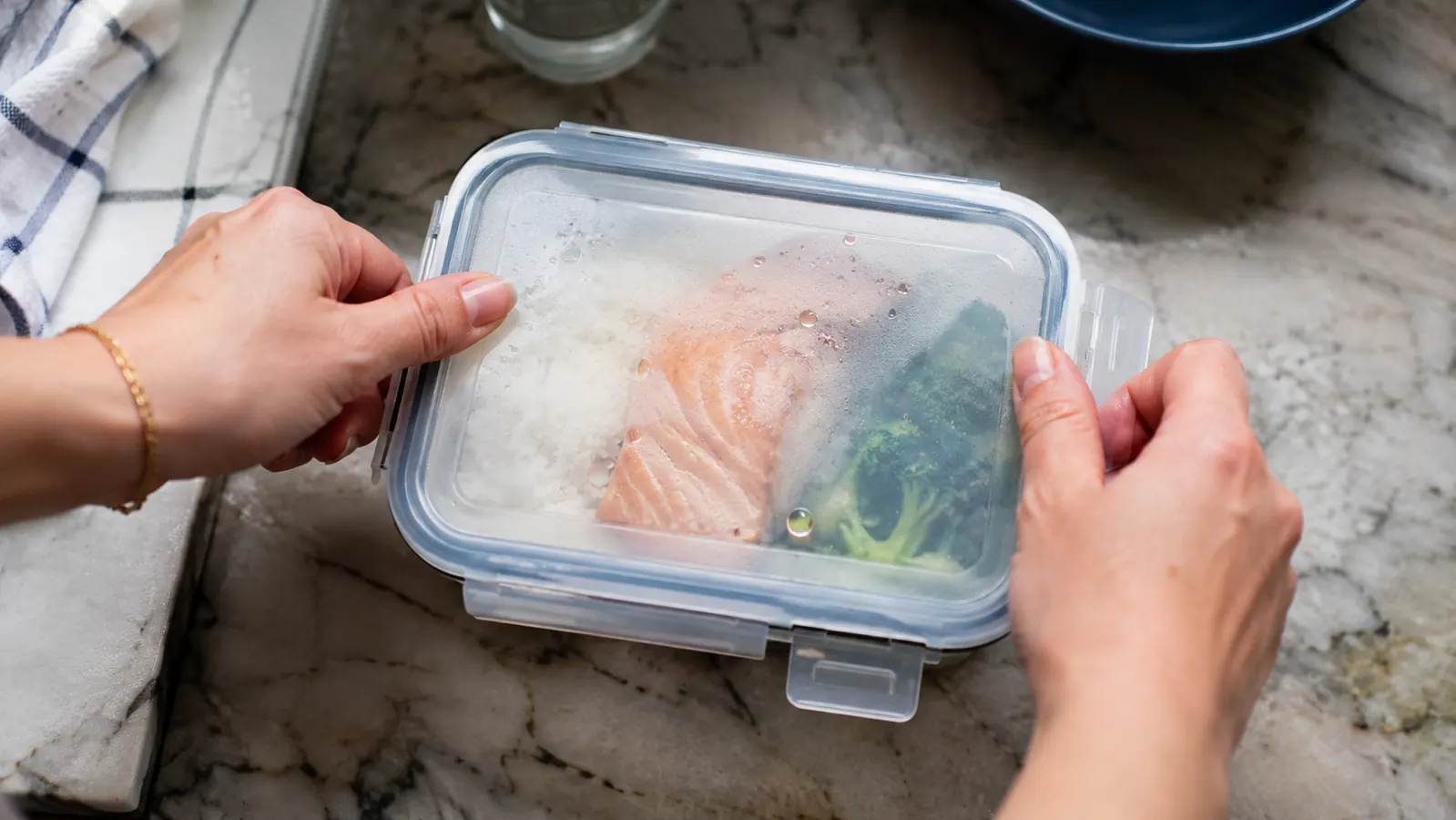
Let me tell you the thing that nobody bothers to mention in their five-star Rubbermaid Brilliance review: the lid has four separate latches, and if you only press down three of them, the container looks completely sealed. The lid sits flush. The sides look even. You put it back on the shelf, you walk away, and the flour slowly turns into a slow-leak situation you will not notice for two days. I know this because it happened to me. Not catastrophically, just enough flour dust on the shelf to teach me a lesson I now want to pass on before you find out the same way.
The Rubbermaid Brilliance containers are genuinely among the best airtight food storage containers I have used, and they have nearly 59,000 Amazon reviews to prove that many people agree. But this review is not about the parts everyone agrees on. It is about what the listing photos do not show, what kinds of buyers end up returning them, and whether the cost makes sense once you do the real math on outfitting an entire pantry.
The Quick Verdict
The Rubbermaid Brilliance containers do what they promise: the seal is real, the clarity holds, and the modular stacking actually locks. The honest catches are the four-latch lid that punishes inattention, the stacking that only works cleanly within the same capacity tier, and a per-container cost that adds up fast if you are starting from zero. Go in knowing those three things and you will not be disappointed.
Amazon Check Today's Price →Know the quirks, still want them? So did I. Here is where to check today's price.
Rubbermaid Brilliance containers are BPA-free, airtight, dishwasher-safe, and modularly stackable. Nearly 59,000 Amazon reviews and a 4.7-star rating. Check today's price and current availability below before you decide.
Amazon Check Today's Price on Amazon →How I Have Been Using These (and What I Stress-Tested)
I have been using the Rubbermaid Brilliance 4.7-cup containers for over a year, and I have specifically been paying attention to the things other reviewers gloss over. My test conditions are not pretty: three kids ranging from six to twelve years old, a pantry shelf at kid-accessible height, and a household where nobody closes anything the way it was designed to close. My twelve-year-old manages the four-latch seal without instruction. My nine-year-old needs a reminder. My six-year-old treats the lid as a suggestion.
Over the past year I have deliberately tried to break the system my own family would break it: lids put on upside down, containers stacked out of sequence, lids run through the dishwasher on the bottom rack by accident, and one container filled with a turmeric-heavy spice mix for about three weeks. I also tracked which questions come up most often in Amazon reviews and comment sections, specifically the ones that do not get answered in typical write-ups. What follows is what I actually found.
The Lid: The One Thing You Need to Understand Before You Buy
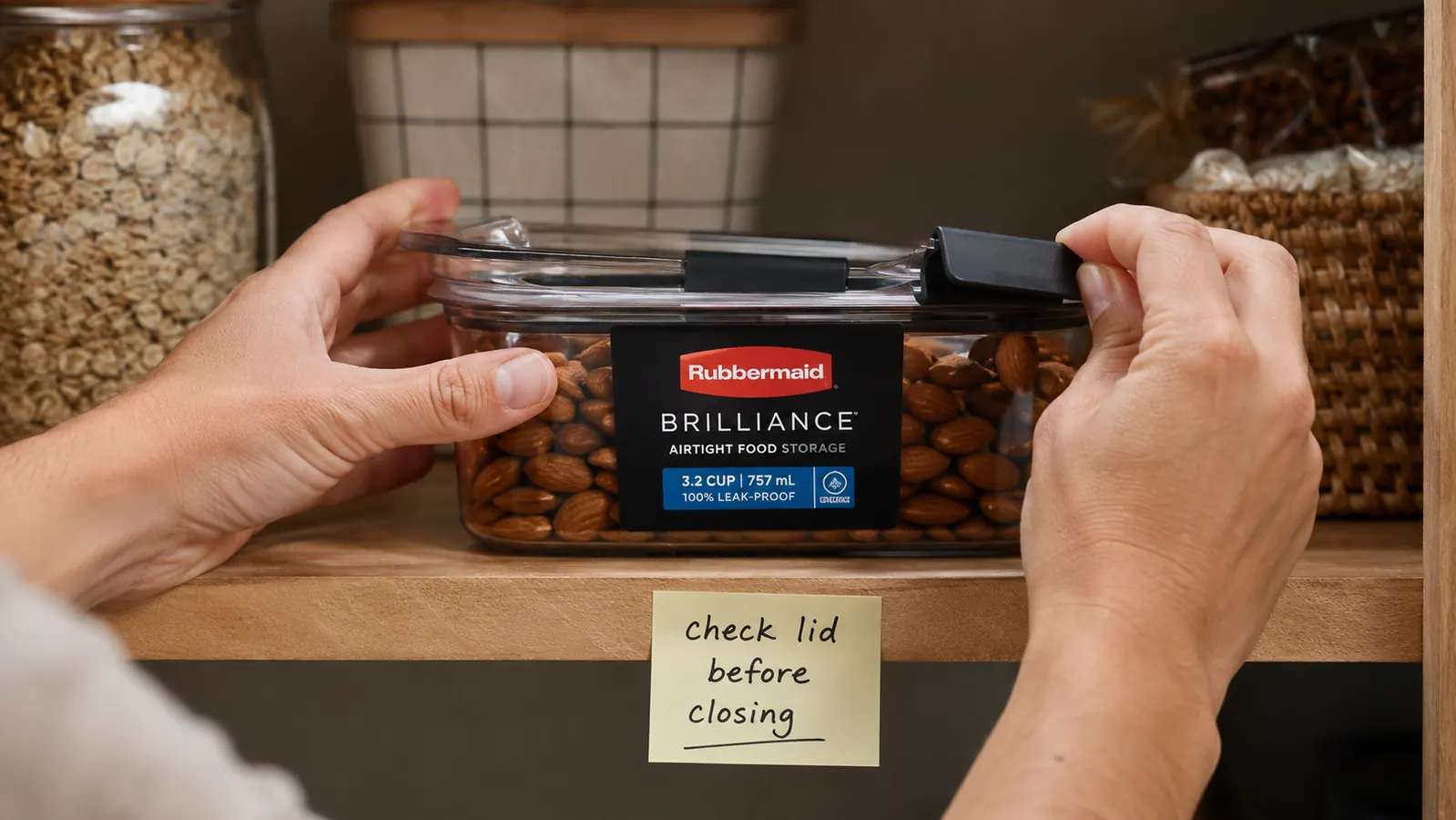
The Rubbermaid Brilliance lid uses a gasket seal plus four side-locking latches. You have to press all four down to achieve the airtight seal. This is not a design flaw, it is the design. The four-point closure is actually what makes the seal so reliable once you are in the habit. The problem is the first two weeks before the habit forms.
Here is the specific thing to watch: the latches require a firm downward click, and the plastic has enough give that you can push a latch almost all the way down without feeling the final click. If you are sealing a container quickly without looking, you will occasionally miss the full engagement on one side. The container looks sealed. It is not. I have seen this catch two adults in my household, not just kids. The fix is simple: press each latch and listen for the click, or run your thumb over the top of the lid to confirm it sits completely flat with no corners lifting. It takes about three seconds. But it is worth knowing this is a real behavior before you attribute a flour spill to bad luck.
After a year of use, the latches on my original set are still functioning correctly. I have not had a latch loosen to the point of not clicking, which was my main concern going in. The gasket is also still intact with no visible pulling away from the lid groove. The long-term seal durability is genuinely good. The short-term attention requirement is just something to know.
The Stacking: What the Product Photos Do Not Show
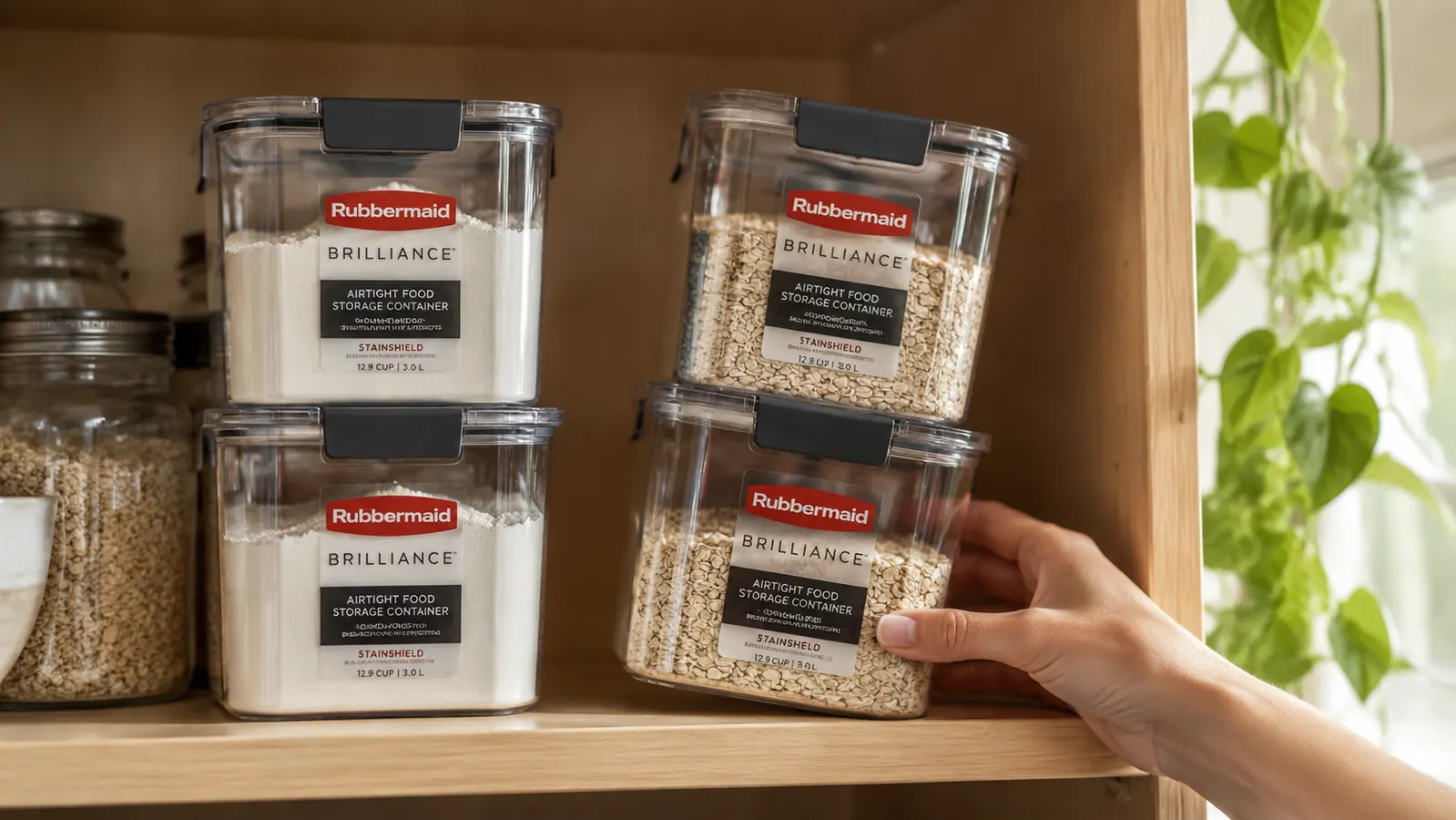
The listing photos show a beautiful column of four identically-sized Rubbermaid Brilliance containers stacked on a pantry shelf. It looks perfect. And it is perfect, as long as you are stacking same-size containers from the same line. Here is the catch the photos do not communicate: the modular stacking feature only works cleanly within the same capacity tier.
The Rubbermaid Brilliance line has multiple sizes: the 1.3-cup, the 3.2-cup, the 4.7-cup, and the larger 9.6-cup. When you stack a 4.7-cup container on top of another 4.7-cup container, the base ridge sits securely in the lid groove and the stack is genuinely stable. When you try to stack a 3.2-cup on top of a 4.7-cup, the footprint mismatch means the smaller container is just sitting on top without any locking engagement. It will stay put under calm conditions, but not under real-pantry conditions with a kid grabbing something next to it.
This matters for how you plan your purchase. If you buy the four-pack because you want a mixed-size set, keep in mind that the stacking only works within each size group. The practical result is that you will probably end up grouping containers by size on your shelf, which looks fine but is worth planning for before you assume you can build one continuous mixed-size tower. If you want a setup that works cleanly, I would suggest the step-by-step pantry system guide I put together, which walks through exactly how to size and sequence your containers before you order.
The stacking is real and it is stable. It just only works within the same size tier. Mix sizes and you lose the locking engagement. Know that before you plan your pantry layout around a single tall tower of different-capacity containers.
The Price Question: What It Actually Costs to Do This Right
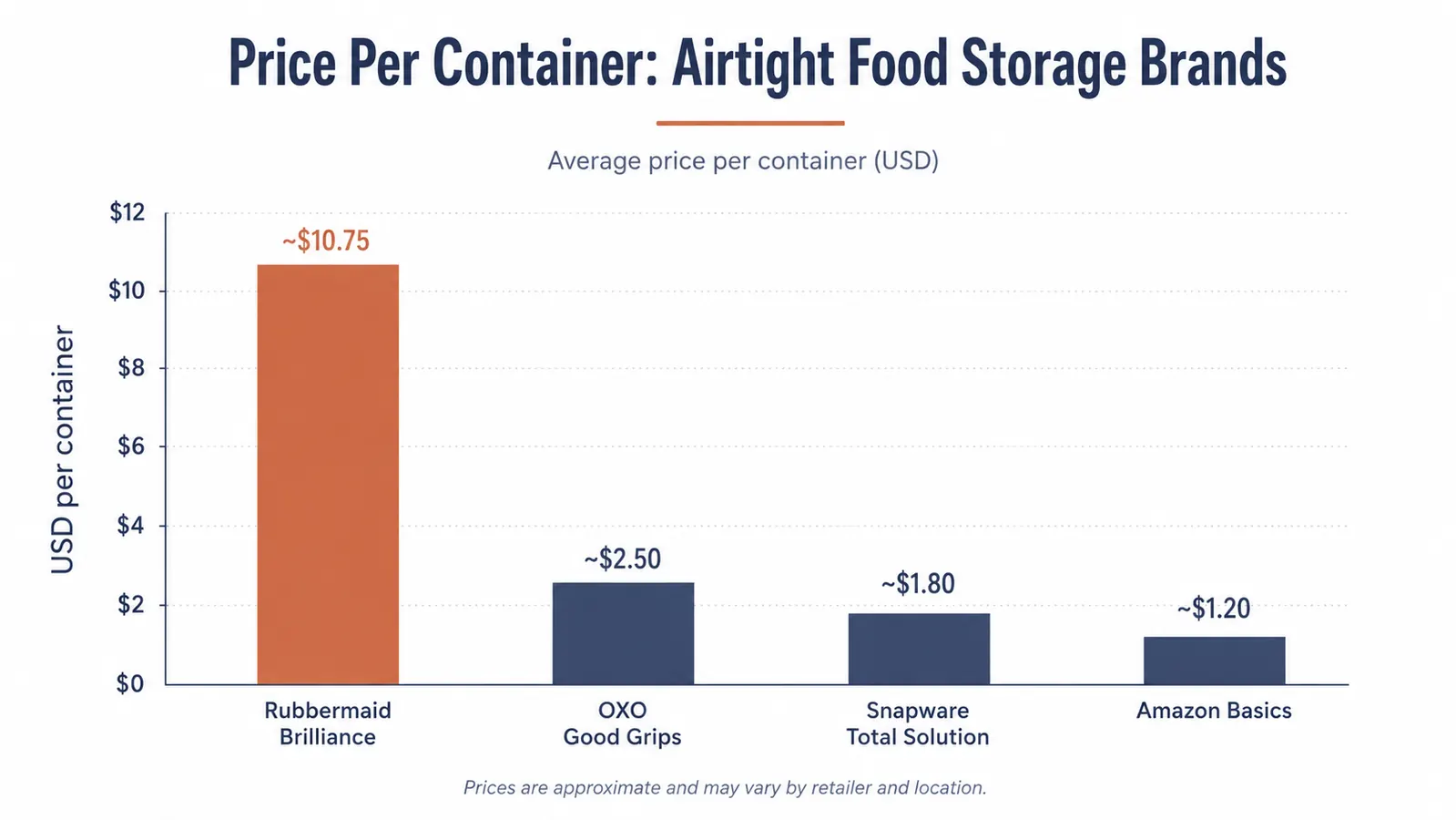
The Rubbermaid Brilliance four-container set of 4.7-cup containers runs at a mid-range price per container when you factor in current pricing. That is not the most expensive food storage on the market, but it is meaningfully more than the budget bins many people start with. The cost question I want to answer honestly is: what does it cost to actually outfit a pantry, not just buy a test set?
Most organized pantries need somewhere between eight and sixteen containers to cover the main dry goods. If you are storing flour, sugar, brown sugar, white rice, brown rice, rolled oats, pasta, cereal, coffee, cornmeal, dried lentils, and a few baking items, you are realistically looking at twelve to fourteen containers. At roughly nine dollars each, that is a budget of around a hundred to a hundred twenty-five dollars to complete the system. That is a real number, and it is fair to pause at that before you decide.
My practical suggestion: do not start with one four-pack and assume you will fill in the gaps later. Either commit to the full system from the start, or start with the four containers for your most-used items only (flour, sugar, oats, pasta are the highest-use in most kitchens), use them long enough to confirm you like the product, and then add the rest. Starting with four and immediately wanting twelve is the path to an inconsistent shelf, which defeats some of the calm-pantry purpose. There is also a running cost question if a latch ever cracks or a gasket fails. Individual lids and replacement gaskets are available for the Brilliance line, which is a meaningful advantage over cheaper brands where you cannot buy replacement parts.
Why People Return These (and Whether Those Reasons Apply to You)
I have read through a meaningful chunk of the one and two-star Amazon reviews for the Rubbermaid Brilliance containers to understand the actual failure cases. The returns cluster into about four categories. First, buyers who did not realize the lid required four-point closure and attributed seal failure to a defect. This is the lid issue I described above. It is not a defect; it is a learning curve that ends after a week. Second, buyers who cracked a latch by forcing the lid down before the gasket was properly aligned. This does happen, and it is the main case where the lid feels fragile. The fix is to set the lid level before latching rather than press down on one side first.
Third, buyers who bought the containers expecting to fit standard five-pound or ten-pound bags of flour in a single container. The 4.7-cup size holds about a five-pound bag of flour at capacity but not with comfortable headroom for scooping. If you buy in bulk sizes, you will want the larger 9.6-cup or larger format from the Brilliance line. Fourth, buyers who found the containers too deep for their specific pantry shelf height. The 4.7-cup containers are taller than most people expect from the listing photos. If your shelves have less than ten inches of vertical clearance, measure before ordering. This is the one sizing catch the product page does not flag clearly, and it is the reason for a portion of the genuine disappointment returns.
Dishwasher Behavior Over Time: The Part Reviewers Skip After Six Weeks
Almost every Rubbermaid Brilliance review confirms the containers are dishwasher-safe. What those reviews rarely cover is what happens after fifty cycles rather than five. At the twelve-month mark, here is what I have observed on my original set. The containers themselves have stayed remarkably clear. No cloudiness, no scratching, no visible hazing. The lids have held up equally well on the latches and gasket. The one visible change is on the inside of the lid where the plastic meets the gasket groove: there is a faint white mineral line that has formed over time from hard-water deposits. It does not affect the seal, and it wipes off with a vinegar-soaked cloth. But if you run your containers through the dishwasher fifty-plus times and suddenly notice a white ring inside the lid, that is what it is.
The containers are rated top-rack dishwasher-safe. I have also run lids on the bottom rack by accident a handful of times and have not seen warping. I am not recommending the bottom rack as a strategy, but if it happens once, it does not appear to cause immediate damage. The brand's guidance is top rack only and I would follow it, but that data point may reassure people who have accidental-bottom-rack households.
What I Liked
- Four-point lid closure provides a genuinely reliable airtight seal once the habit is formed
- Modular stacking locks securely within same-size tiers, resistant to pantry jostling
- Clarity holds after a year of regular dishwasher cycles without significant hazing
- BPA-free with no detectable flavor or odor transfer even after spiced contents
- Replacement lids and gaskets are available, extending container lifespan well beyond budget alternatives
- Works as a real food-freshness system, not just a tidiness upgrade
Where It Falls Short
- Four-latch lid requires deliberate attention to close correctly, punishes quick or distracted sealing
- Stacking only locks within same-size containers, mixed sizes sit loose on top of each other
- Taller than product photos suggest, shoppers with low shelf clearance may have a fit problem
- Per-container cost is higher than budget options, and outfitting a full pantry requires a real budget commitment
- Lid latches can crack if forced down at an angle rather than pressed level, especially by new users
- Mineral deposit line forms inside lid groove over time with hard water, requires periodic vinegar wipe
Who This Is For
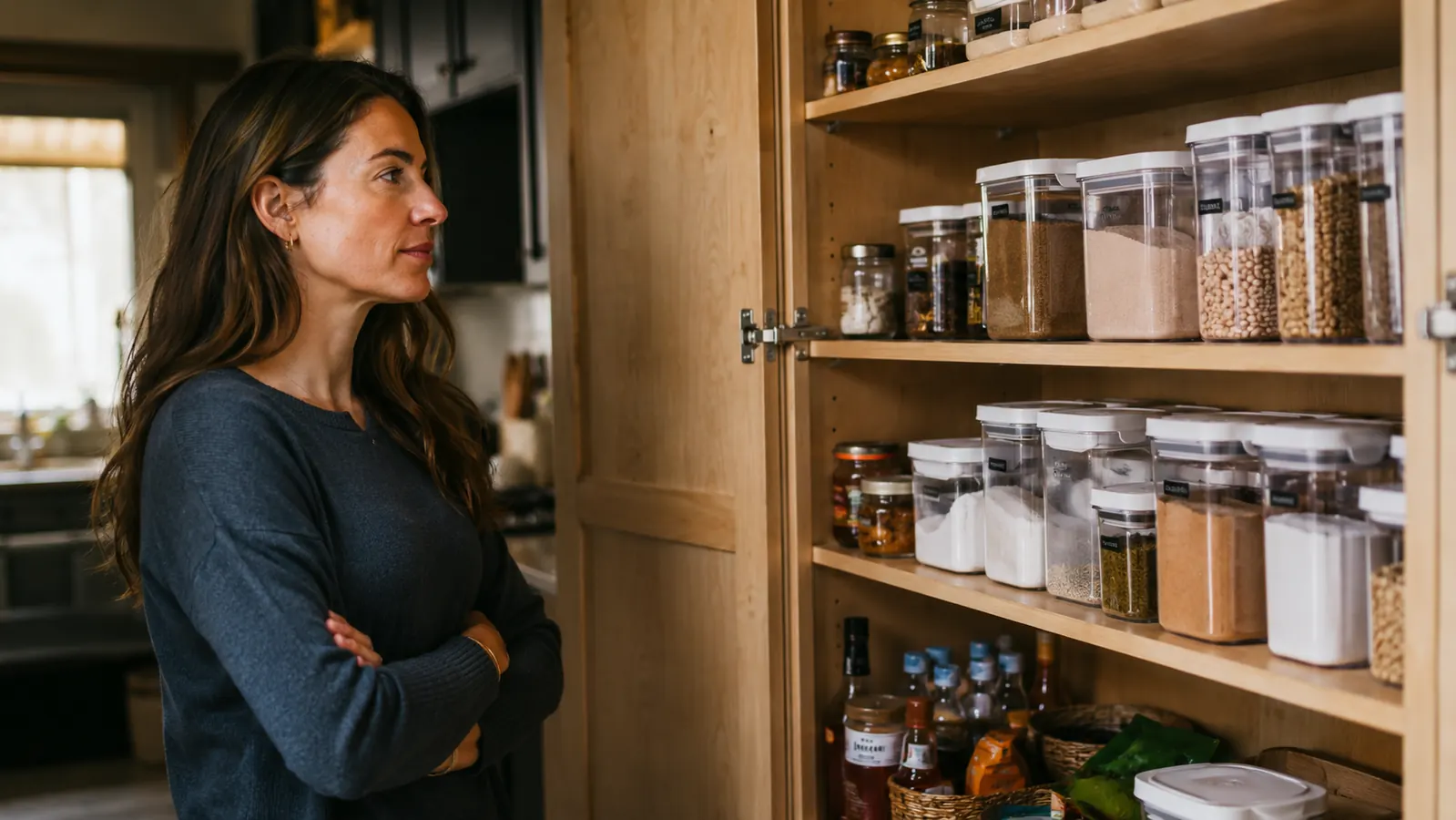
The Rubbermaid Brilliance containers are the right buy for someone who has already tried the cheaper airtight options and found them frustrating, and who wants to make one decision and be done with it. If you are the kind of person who cooks from scratch regularly, buys dry goods in reasonable quantities, and actually wants to know when the flour is running low without opening every container, these are built for exactly your pantry. They are also right for someone who treats the pantry as part of the home environment and wants the visual calm of a consistent, clearly labeled shelf. The uniform design does more for the feel of a pantry than most people expect before they try it.
Who Should Skip Them
Skip these if your pantry shelves have less than ten inches of vertical clearance, or if you buy dry goods in very large quantities (twenty-pound bags of flour, five-pound canisters of protein powder) and want single-container storage. The 4.7-cup size is generous for a household pantry but not a bulk-buying pantry. Also skip them if you are equipping a space where young children (under eight or so) are expected to independently open and reseal the containers as part of their daily routine. The four-latch mechanism is learnable but it is not intuitive for small hands. For a direct comparison of how these stack up against the pricier OXO Good Grips option that some buyers consider, I put together a full breakdown in the long-term Rubbermaid Brilliance review that covers both alternatives.
Still the container I reach for first. Knowing the quirks makes them work better, not worse.
The Rubbermaid Brilliance four-container set is BPA-free, airtight, dishwasher-safe, and backed by nearly 59,000 Amazon reviews. Check today's price and availability before you decide whether the cost-per-container math works for your pantry.
Amazon Check Today's Price on Amazon →